 Orlando Pineapple Company
Grow
Patio pineapple crowns in an Orlando pot
Pineapple Growing in the Florida Home Landscape (HS7/MG055) opens by ruling out the thing people assume. Pineapples are not grown commercially in Florida. They are common dooryard plants in warm locations. A grocery crown in a 3- to 7-gallon pot is a normal planting. The clock from planting to fruit is 18 to 24 months.
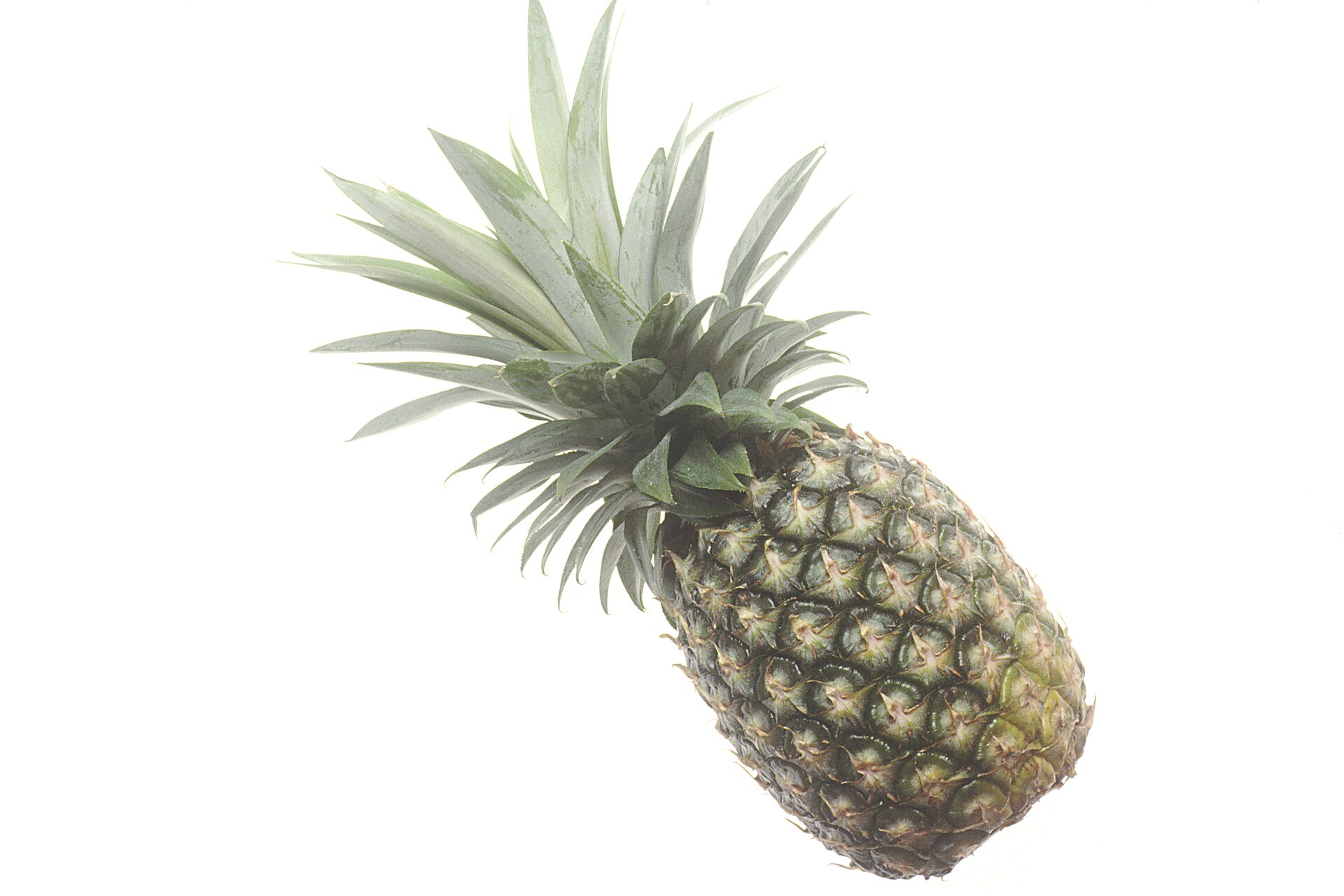
Pineapples are not grown commercially in Florida but are common dooryard yard plants in warm locations throughout the state.
How long it actually takes
The pineapple growing guide puts planting to harvest at 18 to 24 months, depending on cultivar, cultural practices, and temperature. In subtropical climates the same paper stretches that to 18 to 36 months. The plant matures at roughly 14 to 18 months depending on whether it started as a crown, a slip, or a sucker, and it may then flower on its own after cool weather. From flower to picked fruit is another 5 to 7 months. Once the plant has produced 70 to 80 leaves it is ready to flower. Gardening Solutions calls pineapple a slow-growing crop whose fruit is worth the wait.
| Clock | What MG055 prints |
|---|---|
| Planting to harvest | 18 to 24 months (18 to 36 in subtropical climates) |
| Maturity before flower | 14 to 18 months, crown vs slip vs sucker |
| Leaves before flower | 70 to 80 leaves |
| Flower to picked fruit | 5 to 7 months |
| First 14 to 16 months | Keep the plant in active vegetative growth |
There is one shortcut in the paper. Flowering can be induced by placing ripe apple slices in the center of the plant, because the slices release ethylene as they continue to ripen. The pineapple growing guide specifically says not to use calcium carbide, since some sources carry impurities toxic to humans and will contaminate soil and water. Cool nights can also force a bloom before the plant is large, which makes a small fruit. Cover or move a container inside when nights are predicted at or below 60°F if the goal is a bigger plant before bloom.
Crowns, slips, suckers, ratoons
New plants come off the mother plant in four forms. The crown is the leaves plus the top half to three-quarters of an inch of the fruit. Slips come off the stalk below the fruit and have a curve at the base of their leaves. Hapas sit lower and lack that curve. Suckers come from the leaf axils, and ratoons come from underground stem. The rule that matters: the larger the piece, the faster it grows and the sooner it fruits.
| Planting piece | Where it comes from |
|---|---|
| Crown | Leaves plus the top of the fruit |
| Slip / hapa | The stalk below the fruit |
| Sucker | Leaf axils |
| Ratoon | Underground stem, for a second fruit |
How to start a crown
- Twist the crown off a ripe fruit and trim the flesh away from the base. Pull a few of the lower leaves so the pre-formed roots show. Gardening Solutions names that step.
- Let it air dry in the shade for a day or two. The pineapple growing guide says the same for slips and hapas.
- Plant it 3 to 4 inches deep in clean, well-drained potting soil, in a 3- to 7-gallon pot with drainage holes, or in the landscape. Clean media is the paper's main defense against scale.
- Give it full sun. Ground that stays wet after a summer storm is the kill condition. A pot comes inside on a freeze night.
- After the first fruit is harvested, remove all the suckers and hapas but one. That one becomes the ratoon crop.
A single plant can give you up to two fruit that way: the plant crop, then the ratoon. Removing suckers, slips, and hapas while the fruit is developing speeds it up and makes it bigger, so the choice is between a faster first fruit and having planting material ready afterward.
Pot or ground
The pineapple growing guide treats both as normal, which makes this the plant where a container is not a compromise. In the ground, plant in full sun in a spot that does not stay wet after summer rain, at least 5 feet from other trees and buildings, spaced 12 to 36 inches apart. Wider spacing gives bigger plants and bigger fruit. In sandy soil, clear a 3 to 6 foot ring of sod and dig a hole three to four times the container's width and twice its depth.
For a patio, UF/IFAS pineapple guidance names a 3- to 7-gallon container with drainage holes. Fill the mix to within an inch of the top. Water until it drains. Set the pot in full sun. When the plant flowers, tie the stalk to a wooden or bamboo stake with cotton or natural fiber — not wire or nylon — so the fruit does not topple. The larger the pot, the larger the plant and fruit; a small pot restricts both. When buying a nursery plant, avoid a large plant in a small container, because a restricted root system may not grow properly once it is moved. Nursery pineapples usually come in 1 to 3 gallon containers standing 6 inches to 2 feet tall. Inspect the undersides of the lower leaves for insects before you take it home.
FPS039 lists USDA hardiness zones 10A through 11B for pineapple. Look up a specific Orlando address on the 2023 USDA Plant Hardiness Zone Map. Hypothesis: much of the Orlando urban core maps to zone 10a (average annual extreme minimum 30–35°F); inland pockets of Central Florida still include 9b. A zone number is a 30-year average of winter lows, not a forecast. MG055's freeze number is 28°F. Hypothesis for Orange County: a 5-gallon pot on a caddy, carried into a garage on a forecast night in the high 20s, is the method that matches that freeze instruction. Potted soil chills faster than ground. Move the pot before the night, not after.
Heat, cold, water, wind
Optimum growth sits between 68°F and 86°F. Below 60°F or above 90°F growth slows. Plants do not tolerate freezing temperatures below 28°F. Chilling injury from a light frost shows as red and white flecked, scorched upper leaf surfaces and rotting fruit pulp. The pineapple growing guide's protection is plain: cover outdoor plants with an insulating material such as blankets or mulch, and take container plants inside. A lightweight frost blanket is the version of that you can put on in the dark. Get this. For a bed rather than a single plant, the longer roll covers more. Get this.
In cold areas, planting near a wall gives some winter protection but slows growth, and shade cuts fruit size and quality. The plant is drought tolerant but produces less when dry, and the symptoms come on slowly: older leaves wilt, color moves from dark green to pale green to yellow and red, and leaf margins curl. Flooding is the real killer. Continuously wet soil raises root rot risk and can kill the plant. Wind mostly browns leaf tips and margins, though a hurricane will topple plants.
Pests
The pineapple growing guide names mealybugs, scales, and root-feeding grubs of several beetle species. Mealybugs work the leaves and the shallow lateral roots and weaken the plant. Ants farm mealybugs and scales, protecting them from predators and carrying them to new feeding sites, so controlling ants reduces the infestation you are actually chasing. Scales weaken leaves; the defense is clean soil media and frequent inspection. Root knot and reniform nematodes cause decline, stunting, and less fruit, and the only real control is not bringing infested soil or plant material in. Root rots from Phytophthora and Pythium species show as reduced growth, reddish leaves, browning leaf margins, and decline, and they can travel the main stem into the developing fruit. Raccoons, squirrels, and opossums will eat maturing fruit. The paper's fix is a paper bag or newspaper over the fruit.
When to pick
For the sweetest fruit, the pineapple growing guide says to harvest when one-third to two-thirds or more of the shell has turned from green to light green to greenish yellow. You can also cut it at late mature green, meaning full size but not yellowing, and let it finish at room temperature, 78°F to 82°F. Once ripe it holds about a week in the refrigerator. Do not refrigerate immature green fruit, because chilling injury will stop it ripening properly. A corer takes the fruit down in one motion and leaves the shell usable as a bowl. Get this.
Questions
Can I grow the grocery crown?
Yes. The pineapple growing guide lists the crown as standard planting material. Dry it in the shade a day or two, then plant it 3 to 4 inches deep in clean media. The pineapple growing guide puts planting to harvest at 18 to 24 months.
How big a pot for a patio pineapple?
UF/IFAS pineapple guidance names a 3- to 7-gallon container with drainage holes. The larger the container, the greater the potential for a large plant and fruit. Small pots restrict both.
Will it fruit in Orange County?
The pineapple growing guide describes how the plant works and where it does best, which is the warmest, protected, well-drained part of a yard. It does not promise a crop anywhere in the state. Hypothesis: a patio pot you can carry inside is how Orlando stays inside the paper's freeze instruction.
Why did my plant never flower?
The pineapple growing guide puts maturity at 14 to 18 months from planting before flowering is even possible, and cool weather or ripe apple slices are what trigger it. Shade, cold, and small planting material all push that date out.
Sources
- Pineapple Growing in the Florida Home Landscape (HS7/MG055), UF/IFAS
- Pineapple, UF/IFAS Gardening Solutions
- Ananas comosus: Pineapple (FPS039), UF/IFAS
- USDA Plant Hardiness Zone Map (2023)
Patio crowns and the clock · Imported grocery fruit versus the long clock · Shop for corers and cloth.